
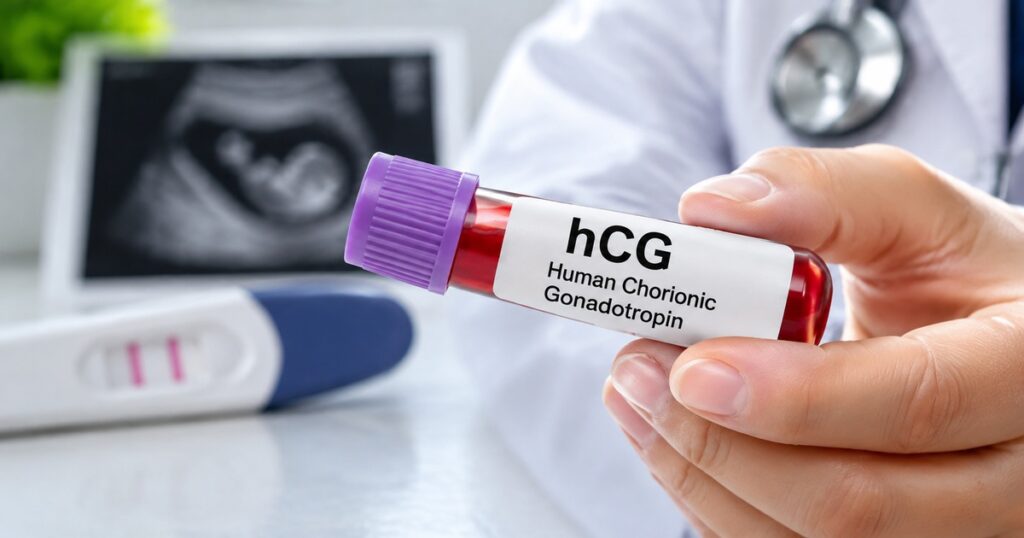
Human Chorionic Gonadotropin (hCG): Medical Uses and Precautions
Understanding what is HCG helps explain an important hormone involved in pregnancy, reproductive function, and selected hormonal treatments. Human chorionic gonadotropin (hCG) is a glycoprotein hormone naturally produced by placental tissue during pregnancy.
In clinical practice, pharmaceutical hCG has established applications in selected fertility treatments and certain hormonal conditions in men. Its biological activity is closely related to luteinizing hormone (LH), allowing it to influence important reproductive processes.
At Vpharma Lab, we explore hormone-related medicines through their pharmacology, clinical applications, and available evidence. This guide explains what human chorionic gonadotropin does, how it works, its medical uses, and the considerations associated with treatment.
What Is HCG and What Does It Do?
Human chorionic gonadotropin (hCG) is a hormone produced by cells associated with the developing placenta after implantation. It can be detected in blood and urine, making it the principal hormone measured by pregnancy tests.
During early pregnancy, hCG helps maintain the corpus luteum, a temporary ovarian structure responsible for producing progesterone. This hormone supports the uterine environment during the early stages of pregnancy.
HCG is also structurally and functionally similar to LH, a hormone involved in reproductive regulation in both men and women.
How Does HCG Work?
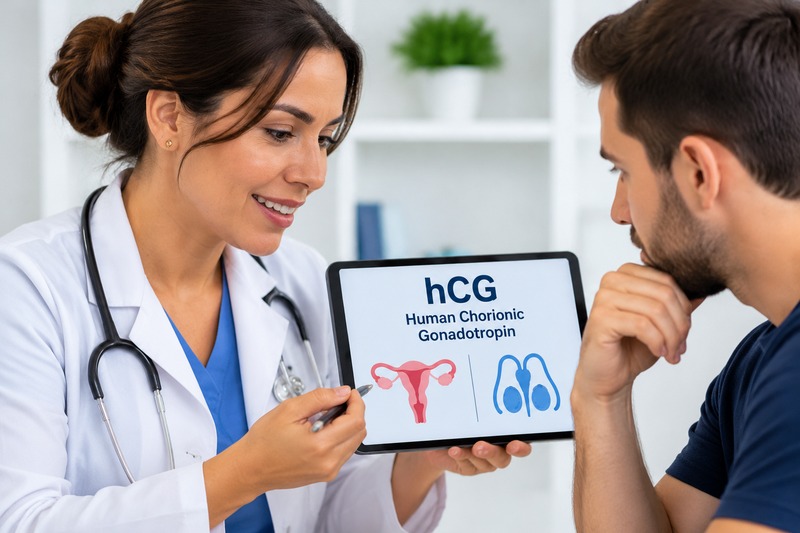
HCG interacts with the luteinizing hormone/choriogonadotropin receptor (LH/CG receptor). This receptor plays an important role in gonadal hormone production and reproductive development.
In women, Human chorionic gonadotropin can stimulate the final stages of ovarian follicle maturation and trigger ovulation.
In men, it stimulates Leydig cells in the testes, supporting endogenous testosterone production. This activity also contributes to reproductive function and, in selected clinical situations, sperm production.
The LH-like activity of hCG explains its importance in reproductive endocrinology.
Medical Uses of Human Chorionic Gonadotropin
Pharmaceutical hCG has several established clinical applications. Its use depends on the patient’s diagnosis, age, reproductive status, and the specific product’s approved indications.
1. Fertility Treatment and Ovulation Induction
One established application of hCG fertility treatment involves inducing the final stages of ovarian follicle maturation.
During selected fertility protocols, healthcare professionals first use other gonadotropins to support follicular development. Once appropriate follicular growth is confirmed, hCG may be administered to imitate the natural LH surge.
This process supports final oocyte maturation and helps coordinate the timing of ovulation.
According to the American Society for Reproductive Medicine, ovulation commonly occurs approximately 36–48 hours after an hCG trigger injection.
The timing is important in fertility procedures because it helps coordinate ovulation with planned conception attempts or assisted reproductive techniques.
2. Hormonal Treatment in Men
Another established application involves selected cases of hypogonadotropic hypogonadism in men.
This condition occurs when insufficient hormonal signaling from the hypothalamus or pituitary affects testicular function.
HCG stimulates Leydig cells to produce testosterone, supporting the body’s endogenous hormonal activity.
In appropriately selected patients, this treatment may also support spermatogenesis, the biological process responsible for sperm production.
Additional treatments, such as follicle-stimulating hormone (FSH), may be considered according to the underlying condition and reproductive objectives.
The treatment approach depends on hormone measurements, fertility goals, and specialist assessment.
3. Selected Pediatric Applications
Certain pharmaceutical hCG product labels also include selected cases of prepubertal cryptorchidism.
Cryptorchidism refers to a condition in which one or both testicles have not descended into the scrotum.
HCG’s androgen-stimulating activity has historically been used in selected pediatric cases to encourage testicular descent when there is no anatomical obstruction.
The indication depends on the specific product label and clinical assessment. Pediatric applications require specialist evaluation.
4. HCG in Pregnancy Testing
Human chorionic gonadotropin also has an important diagnostic role because its concentration changes throughout early pregnancy.
Pregnancy tests detect hCG in urine or blood. Laboratory testing can also measure quantitative concentrations, helping healthcare professionals assess early pregnancy development when clinically appropriate.
HCG measurement is a fundamental tool in reproductive and pregnancy-related testing.
One relevant consideration is that an hCG injection used in fertility treatment can temporarily influence pregnancy test results.
Residual injected hormone may produce a positive result before pregnancy is established. The American Society for Reproductive Medicine notes that testing within approximately 10 days after an hCG trigger may produce a false-positive result.
For this reason, fertility clinics provide individualized instructions regarding the appropriate testing date.
Different Forms of Pharmaceutical HCG
Pharmaceutical human chorionic gonadotropin is available in different formulations.
Urinary-Derived HCG
Urinary-derived hCG is obtained from the urine of pregnant individuals and purified for pharmaceutical use.
It has an established history in fertility treatment and selected hormonal applications.
Recombinant HCG
Recombinant hCG is produced through biotechnology rather than direct extraction from biological sources.
Both urinary-derived and recombinant formulations provide hCG activity, although their manufacturing processes and product characteristics differ.
The route of administration, formulation, and approved indications depend on the specific medicine.
In the United States, FDA-approved prescription hCG products are injectable formulations. Product labeling provides the relevant administration and storage information.
HCG and Other Hormonal Treatments

HCG belongs to a broader group of medicines that influence reproductive hormone pathways.
Understanding its differences from related treatments helps explain its clinical applications.
HCG vs Clomiphene
Human chorionic gonadotropin and clomiphene both influence reproductive hormone function, but their mechanisms are different.
The HCG directly activates LH/CG receptors, producing LH-like activity.
Clomiphene is a selective estrogen receptor modulator (SERM). It influences estrogen feedback at the hypothalamus and pituitary, which can increase endogenous FSH and LH release.
Both medicines have applications in reproductive medicine, although their specific indications differ.
For a more detailed explanation, read our article on Clomiphene: Medical Uses, Mechanism, and Side Effects.
HCG and Testosterone Production
Human chorionic gonadotropin stimulates the testes to produce testosterone through Leydig cell activation.
This distinguishes it pharmacologically from administering testosterone directly.
In selected men with secondary hypogonadism, hCG can support endogenous testosterone production and reproductive function.
The appropriate treatment depends on the underlying hormonal condition and the patient’s fertility objectives.
HCG Precautions and Clinical Monitoring
HCG treatment requires individualized clinical evaluation and appropriate monitoring. The type of follow-up depends on the medical indication and the specific formulation.
Monitoring During Female Fertility Treatment
When Human chorionic gonadotropin is used to trigger ovulation, healthcare professionals evaluate ovarian follicular development before treatment.
Monitoring may include:
- Transvaginal ultrasound examinations.
- Serum estradiol measurements.
- Assessment of follicular development.
- Evaluation of the ovarian response.
- Follow-up after the trigger injection.
These measures help coordinate treatment timing and evaluate ovarian response.
Monitoring in Men
In male hormonal treatment, assessment may include testosterone concentrations, reproductive function, and relevant clinical symptoms.
Semen analysis may also be considered when fertility is an important treatment objective.
The monitoring schedule varies according to the underlying diagnosis and individual response.
Understanding Ovarian Hyperstimulation
During fertility treatment, stimulation of the ovaries may lead to a response involving several developing follicles.
Healthcare professionals monitor this process to evaluate ovarian activity and identify patients who may require additional assessment.
Ovarian hyperstimulation syndrome (OHSS) is a recognized clinical consideration in fertility protocols involving gonadotropins and hCG.
Symptoms such as significant pelvic pain, abdominal swelling, rapid weight gain, or breathing difficulties require prompt medical evaluation.
The aim of monitoring is to support an appropriate ovarian response and guide clinical decisions throughout treatment.
Other Treatment Considerations
Product information also describes possible effects such as injection-site discomfort, headache, fatigue, fluid retention, and breast enlargement in some men.
Individual responses vary according to the formulation, clinical indication, and patient characteristics.
People with relevant cardiac or kidney conditions should ensure their medical history is reviewed before treatment.
Human chorionic gonadotropin should be administered according to the specific prescription and professional guidance.
Is HCG Used for Weight Management?
Human chorionic gonadotropin has sometimes appeared in commercial weight-management programs. However, the FDA has not approved hCG products for weight loss.
Available evidence does not establish hCG as an effective treatment for obesity or demonstrate additional weight reduction attributable to the hormone.
This distinction is important because pharmaceutical hCG has established reproductive and hormonal applications that are separate from weight-management claims.
Understanding the Role of HCG in Reproductive Medicine
Human chorionic gonadotropin is an important hormone in reproductive physiology and selected hormonal treatments.
Its LH-like activity explains its role in ovulation induction and testosterone production in appropriately selected patients.
Its diagnostic relevance in pregnancy testing also demonstrates how hCG participates in several aspects of reproductive healthcare.
At Vpharma Lab, we aim to explain hormonal compounds through their mechanisms, medical applications, and pharmaceutical characteristics. Understanding these distinctions provides a clearer perspective on hCG and its role in clinical practice.
For additional information about hormone-related medicines, explore the Vpharma Lab Blog.
Frequently Asked Questions About Human Chorionic Gonadotropin
1. What is HCG?
HCG stands for human chorionic gonadotropin. It is a hormone naturally produced by placental tissue during pregnancy and is also available as a prescription medicine.
2. What Does HCG Do in the Human Body?
Human chorionic gonadotropin supports the corpus luteum during early pregnancy and produces LH-like activity. It also stimulates testosterone production in male reproductive tissue.
3. What Is HCG Used for Medically?
Selected medical applications include ovulation induction, treatment of certain cases of male hypogonadotropic hypogonadism, and specific pediatric indications depending on the product.
4. How Does HCG Stimulate Ovulation?
HCG mimics the natural LH surge, supporting final follicular maturation and the release of an egg during selected fertility protocols.
5. How Does HCG Influence Testosterone Production?
Human chorionic gonadotropin activates LH/CG receptors on Leydig cells in the testes, stimulating endogenous testosterone production.
6. What Is the Difference Between Urinary and Recombinant HCG?
Urinary-derived hCG is purified from human urine, while recombinant hCG is produced through biotechnology. Both provide hCG activity but have different manufacturing characteristics.
7. Can HCG Influence Sperm Production?
In selected men with hypogonadotropic hypogonadism, hCG can stimulate testicular testosterone production and support spermatogenesis. Treatment depends on the underlying diagnosis.
8. Why Is HCG Used in Pregnancy Tests?
Pregnancy tests detect hCG in urine or blood. Its presence and changing concentration help identify and assess pregnancy.
9. Can an HCG Injection Affect Pregnancy Test Results?
Yes. Residual injected hCG can temporarily produce a positive pregnancy test. Testing should follow the timing instructions provided by the fertility clinic.
10. Why Is Monitoring Important During HCG Treatment?
Monitoring helps evaluate hormonal response, follicular development, fertility outcomes, and relevant treatment considerations. The approach depends on the clinical indication.
References and Further Reading
- U.S. National Library of Medicine — DailyMed. Pregnyl: Human Chorionic Gonadotropin Prescribing Information.
- American Society for Reproductive Medicine. Use of Exogenous Gonadotropins for Ovulation Induction in Anovulatory Women.
- ReproductiveFacts.org — ASRM. Medications for Inducing Ovulation.
- U.S. Food and Drug Administration. Questions and Answers on HCG Products for Weight Loss.


