

PDE5 Inhibitors and Nitrates: Understanding a Serious Drug Interaction
Understanding PDE5 inhibitors and nitrates requires examining how both medication classes influence blood vessel function. These medicines have different clinical applications but share pathways involved in vascular relaxation.
PDE5 inhibitors support erectile function by maintaining cyclic guanosine monophosphate (cGMP) signaling. Nitrates increase nitric oxide-related signaling, which also promotes vascular relaxation.
When combined, their effects can produce an excessive reduction in blood pressure. This pharmacological interaction is important when evaluating cardiovascular and sexual health treatments.
At Vpharma Lab, we explore pharmaceutical interactions through their mechanisms, applications, and available clinical evidence. This guide explains the interaction, the medications involved, and important considerations for clinical decision-making.
What Are PDE5 Inhibitors?
Phosphodiesterase type 5 inhibitors (PDE5 inhibitors) are medicines that influence blood flow through the nitric oxide and cGMP signaling pathway.
They are commonly prescribed for erectile dysfunction (ED). Certain formulations also have established applications involving pulmonary arterial hypertension.
Examples include:
- Sildenafil: commonly associated with erectile dysfunction and specific pulmonary hypertension treatments.
- Tadalafil: used for erectile dysfunction, benign prostatic hyperplasia, and selected pulmonary hypertension indications.
- Vardenafil: used for erectile dysfunction.
- Avanafil: used for erectile dysfunction.
Although these medicines share a pharmacological target, their absorption, duration, and metabolic characteristics differ.
For a broader comparison, read our article on Sildenafil vs Tadalafil: Differences, Duration, and Interactions.
How Do PDE5 Inhibitors Work?
During sexual stimulation, nitric oxide is released in erectile tissue. It activates an enzyme called soluble guanylate cyclase, increasing intracellular cGMP.
cGMP promotes smooth muscle relaxation and supports increased blood flow. This process contributes to the physiological response required for an erection.
The PDE5 enzyme normally breaks down cGMP. PDE5 inhibitors slow this process, helping maintain the signaling pathway.
Their mechanism enhances an existing physiological response rather than independently initiating sexual desire.
What Are Nitrates and How Do They Work?
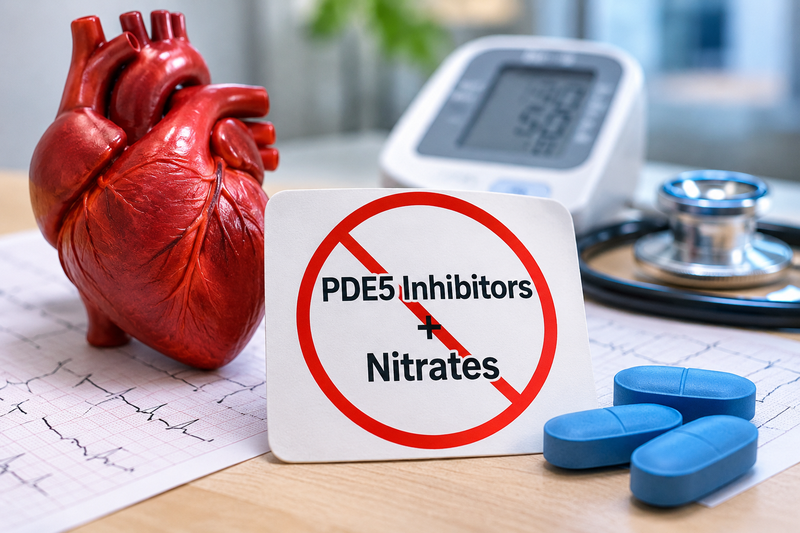
Nitrates are medicines that support vascular relaxation through nitric oxide-related pathways. They have established applications in cardiovascular care, particularly in angina management.
Common examples include:
- Nitroglycerin: available in sublingual tablets, sprays, patches, and other formulations.
- Isosorbide mononitrate: used in the management of angina.
- Isosorbide dinitrate: another medication used in cardiovascular treatment.
Organic nitrites, including amyl nitrite, also influence related nitric oxide pathways. Recreational inhaled products sometimes called poppers belong to this related group.
What Is the Role of Nitric Oxide?
Nitrates increase nitric oxide-related signaling, which activates soluble guanylate cyclase. This increases cGMP and promotes vascular smooth muscle relaxation.
These effects influence vascular resistance and cardiac workload. The same signaling pathway connects nitrates with PDE5 inhibitors. This connection explains their clinically important interaction.
PDE5 Inhibitors and Nitrates: Understanding the Interaction
The interaction occurs because both medication classes increase activity within the nitric oxide/cGMP pathway.
Nitrates promote cGMP production through nitric oxide signaling. PDE5 inhibitors slow the enzyme responsible for cGMP breakdown.
When both mechanisms operate simultaneously, cGMP activity can increase substantially. This produces greater vascular relaxation and may cause a pronounced reduction in blood pressure.
Understanding the Pharmacological Mechanism
The interaction involves three main stages:
- Nitrates increase nitric oxide-related signaling and cGMP production.
- PDE5 inhibitors reduce cGMP breakdown.
- Their combined effects can produce excessive vascular relaxation and hypotension.
The combination is contraindicated because blood pressure may fall to clinically unsafe levels.
Possible consequences include dizziness, fainting, reduced blood flow to important organs, and cardiovascular complications.
This interaction appears in official prescribing information and cardiovascular guidelines. It applies to regular and intermittent nitrate administration.
Which PDE5 Inhibitors Interact With Nitrates?
The interaction applies to the principal PDE5 inhibitors used in erectile dysfunction treatment.
a. Sildenafil and Nitrates
Sildenafil and nitrates share effects on the nitric oxide/cGMP pathway. Combining sildenafil with organic nitrates can amplify their blood-pressure-lowering effects.
Its prescribing information identifies organic nitrates and nitrites as contraindicated combinations. The same consideration applies to intermittent nitrate use.
b. Tadalafil and Nitrates
Tadalafil and nitrates interact through the same pharmacological mechanism. Tadalafil has a longer elimination half-life than sildenafil, which influences clinical timing considerations.
Its prolonged pharmacokinetic profile is particularly relevant when clinicians evaluate potential nitrate administration following recent tadalafil use.
c. Vardenafil and Nitrates
Vardenafil and nitrates also influence the same vascular signaling pathway. Their combination is contraindicated under official prescribing information.
The current U.S. labeling states that a suitable interval for safe nitrate administration following vardenafil has not been established.
d. Avanafil and Nitrates
Avanafil and nitrates have the same fundamental pharmacological interaction. Avanafil’s clinical profile includes a specific timing consideration for exceptional situations involving medically necessary nitrate administration.
Its prescribing information requires close medical supervision and appropriate cardiovascular monitoring in such circumstances.
Clinical Timing Considerations Between PDE5 Inhibitors and Nitrates
The duration of PDE5 inhibitor activity is an important consideration when clinicians evaluate potential nitrate administration.
The 2025 ACC/AHA acute coronary syndrome guideline provides commonly cited minimum intervals for avoiding nitrates following recent PDE5 inhibitor use.
| PDE5 inhibitor | Guideline reference interval |
| Avanafil | At least 12 hours |
| Sildenafil | At least 24 hours |
| Vardenafil | At least 24 hours |
| Tadalafil | At least 48 hours |
These intervals are clinical reference points, not instructions for patients to resume nitrates independently.
There are also differences between clinical guidelines and individual product labeling. For example, U.S. sildenafil and vardenafil labeling does not establish a universally safe interval for nitrate administration.
Tadalafil and avanafil labeling describe specific minimum intervals for exceptional, medically supervised situations. These do not establish automatic permission to combine the medications.
Other factors, including metabolism, kidney or liver function, and interacting medications, can influence drug exposure.
What Should Someone Do If Chest Pain Occurs After Taking a PDE5 Inhibitor?
Chest discomfort following PDE5 inhibitor use requires prompt medical assessment, particularly when it occurs during physical or sexual activity.
The person should seek emergency medical assistance and inform responders which medication they took and when they took it.
They should not self-administer nitroglycerin or another nitrate following recent PDE5 inhibitor use.
Emergency clinicians can evaluate the situation and determine appropriate cardiovascular management. Knowing the precise medication and administration time helps guide those decisions.
People who regularly require nitrate therapy should discuss erectile dysfunction treatment options with their cardiovascular care team. Prescribed cardiovascular medicines should never be stopped independently.
Other Medication Interactions Worth Understanding
PDE5 inhibitors also interact with medicines that influence blood pressure through different mechanisms.
Alpha-Blockers and Antihypertensive Medicines
Alpha-blockers and other antihypertensive medicines can produce additive blood-pressure effects when combined with PDE5 inhibitors.
Examples include doxazosin and other medications prescribed for hypertension or urinary symptoms. The relevance depends on the specific medication and clinical circumstances.
Riociguat and cGMP Signaling
Riociguat is a soluble guanylate cyclase stimulator used in selected pulmonary hypertension conditions. It is not a nitrate, but it influences the same signaling pathway.
Combining riociguat with PDE5 inhibitors is contraindicated under relevant prescribing information. This distinction demonstrates why medication reviews should consider different mechanisms affecting the same physiological pathway.
Medical Context: Coordinating Cardiovascular and Sexual Health
Sexual health and cardiovascular health are closely connected. Erectile dysfunction may coexist with conditions such as diabetes, hypertension, and cardiovascular disease.
PDE5 inhibitors have established clinical applications, while nitrates remain important medicines in cardiovascular care. Their respective roles depend on the individual’s diagnosis and treatment requirements.
When both treatments appear relevant, clinicians evaluate cardiovascular indications, current medications, and potential alternatives.
The objective is to coordinate treatment while respecting the pharmacological characteristics of each medicine.
For additional information about erectile dysfunction medicines, read our Sildenafil vs Tadalafil educational article. Readers can also explore the Vpharma Lab Blog for further pharmaceutical education.
Conclusion: Understanding the PDE5 Inhibitors and Nitrates Interaction
PDE5 inhibitors and nitrates influence the same nitric oxide/cGMP signaling pathway through different mechanisms. Their combined effects can produce substantial vascular relaxation and a significant reduction in blood pressure.
Sildenafil, tadalafil, vardenafil, and avanafil have distinct pharmacological characteristics. Their duration and prescribing information influence how clinicians evaluate the timing of potential nitrate administration.
Understanding this interaction supports informed discussions between patients, prescribers, and cardiovascular specialists. Clear medication histories and appropriate clinical coordination remain essential when managing sexual and cardiovascular health.
At Vpharma Lab, we aim to explain pharmaceutical mechanisms and clinically relevant interactions through accurate and accessible educational content.
Frequently Asked Questions About PDE5 Inhibitors and Nitrates
1. Why Do PDE5 Inhibitors Interact With Nitrates?
Both medication classes influence nitric oxide and cGMP signaling. Their combined effects can increase vascular relaxation and produce a substantial reduction in blood pressure.
2. Which PDE5 Inhibitors Have This Interaction?
The interaction applies to sildenafil, tadalafil, vardenafil, and avanafil. All four influence the PDE5 enzyme and cGMP pathway.
3. Which Medicines Are Considered Organic Nitrates?
Examples include nitroglycerin, isosorbide mononitrate, and isosorbide dinitrate. Organic nitrites, such as amyl nitrite, also influence related pathways.
4. Does the Interaction Apply to Occasional Nitroglycerin Use?
Yes. The contraindication includes regular and intermittent nitrate administration. Occasional nitroglycerin use must also be considered during clinical evaluation.
5. Why Is the Tadalafil Interval Longer?
Tadalafil has a longer elimination half-life than several other PDE5 inhibitors. This influences the timing considerations used by clinicians.
6. What Are the Commonly Cited Timing Intervals?
The 2025 ACC/AHA guideline cites 12 hours for avanafil, 24 hours for sildenafil and vardenafil, and 48 hours for tadalafil. These are clinical reference intervals, not self-administration instructions.
7. What Should Be Reported During Emergency Cardiovascular Care?
Patients should identify the PDE5 inhibitor, its administration time, and other medicines they use. This information helps emergency clinicians determine appropriate treatment.
8. Is Riociguat Classified as a Nitrate?
No. Riociguat is a soluble guanylate cyclase stimulator. However, it affects cGMP signaling and has a separate contraindicated interaction with PDE5 inhibitors.
9. Can Alpha-Blockers Also Influence Blood Pressure When Combined With PDE5 Inhibitors?
Yes. Both medication classes can influence vascular tone. Their combination may produce additive blood-pressure effects requiring individualized clinical assessment.
10. Why Is Medication Coordination Important for Sexual and Cardiovascular Health?
Different medicines may influence shared physiological pathways. Reviewing prescriptions, cardiovascular history, and treatment objectives helps clinicians coordinate appropriate care.
References and Further Reading
- American College of Cardiology / American Heart Association. 2025 Guideline for the Management of Acute Coronary Syndromes.
- DailyMed — U.S. National Library of Medicine. Sildenafil Citrate Prescribing Information.
- DailyMed — U.S. National Library of Medicine. Tadalafil Prescribing Information.
- DailyMed — U.S. National Library of Medicine. Vardenafil Prescribing Information.
- DailyMed — U.S. National Library of Medicine. Avanafil Prescribing Information.
- NCBI Bookshelf. Sildenafil: Pharmacology and Clinical Considerations.


