
Sildenafil vs Tadalafil: Differences, Duration, and Interactions
Sildenafil vs tadalafil is a common comparison for people seeking information about erectile dysfunction treatments. Both medicines belong to a class called phosphodiesterase type 5 (PDE5) inhibitors. They help improve blood flow to the penis when sexual stimulation occurs.
Although they share a similar mechanism, their duration, food interactions, and some side effects differ. Understanding these distinctions helps explain why individual treatment decisions may vary.
At Vpharma Lab, we examine pharmaceutical compounds through their mechanisms, clinical applications, and documented characteristics. This guide compares sildenafil and tadalafil, including their duration of action, potential adverse effects, and important drug interactions.
What Are Sildenafil and Tadalafil?
Sildenafil and tadalafil are PDE5 inhibitors primarily associated with the treatment of erectile dysfunction (ED). They help support the physiological process required to achieve and maintain an erection.
Both medicines depend on the body’s normal response to sexual stimulation. Neither medication automatically produces an erection or directly increases sexual desire.
The active ingredients are different, even though their primary mechanism for treating erectile dysfunction is similar. Their pharmacological characteristics influence how long their effects may remain available and how they interact with certain medicines.
Sildenafil is widely known by the brand name Viagra. Tadalafil is commonly associated with Cialis. Generic formulations of both active ingredients are also available in many markets.
Their approved uses depend on the particular product and country. Sildenafil also has a separate medical use in pulmonary arterial hypertension, while tadalafil is approved for certain symptoms of benign prostatic hyperplasia.
Sildenafil vs Tadalafil: Key Differences
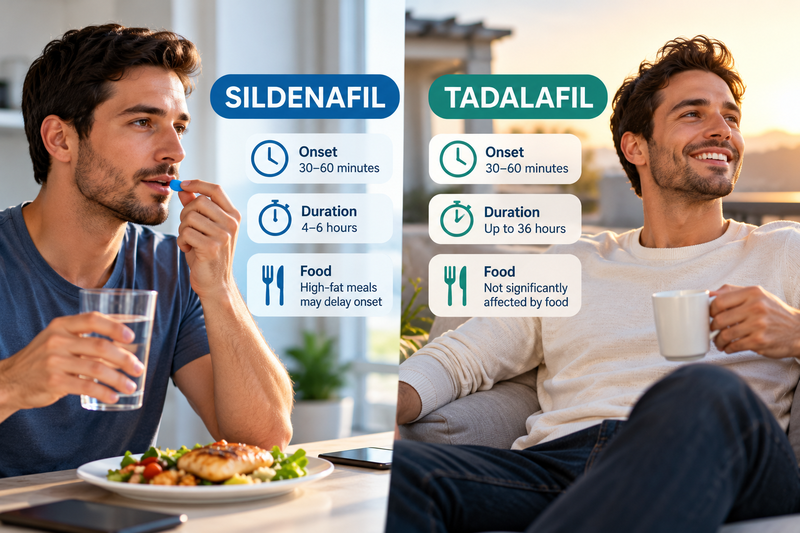
The main differences involve their duration of action, the influence of food, and some characteristics of their side-effect profiles.
| Feature | Sildenafil | Tadalafil |
| Drug class | PDE5 inhibitor | PDE5 inhibitor |
| Main use discussed here | Erectile dysfunction | Erectile dysfunction |
| Typical onset | Often around 30–60 minutes | Often around 30–60 minutes |
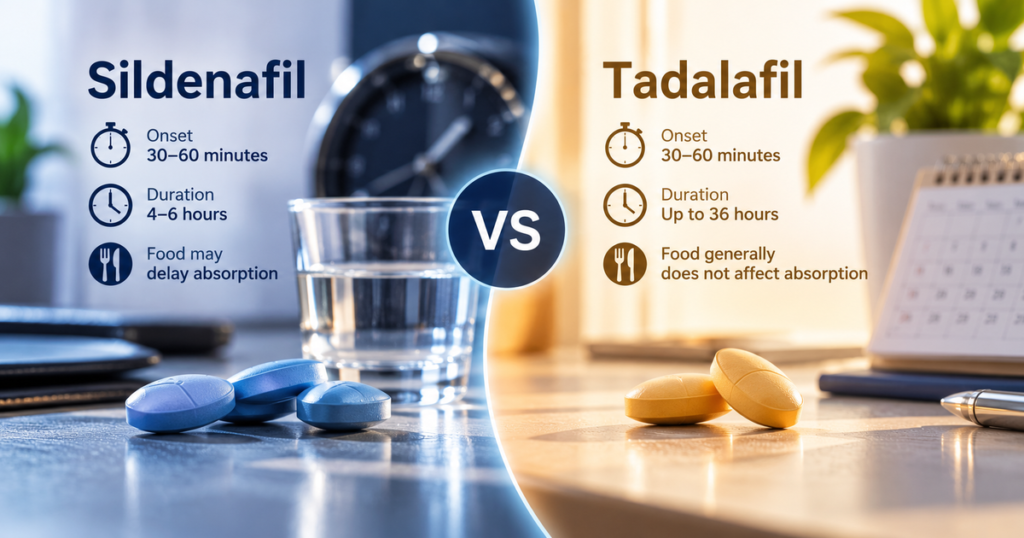
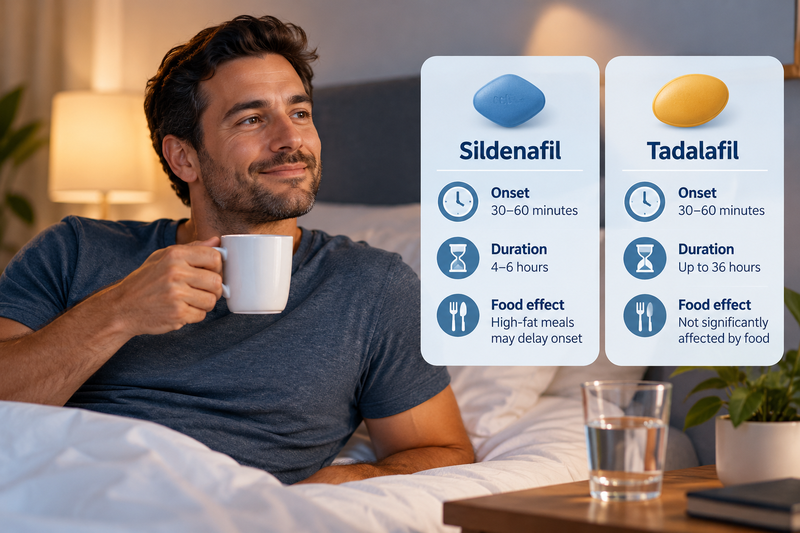
| Approximate effect window | Usually around 4–6 hours | Up to 36 hours |
| Food considerations | A high-fat meal may delay onset | Food generally has little effect on absorption |
| Common side effects | Headache, flushing, indigestion, nasal congestion | Headache, indigestion, nasal congestion, back pain, muscle aches |
| Additional approved uses | Certain products treat pulmonary arterial hypertension | Certain products treat benign prostatic hyperplasia |
| Key interaction concern | Nitrates and medicines affecting blood pressure | Nitrates and medicines affecting blood pressure |
These figures describe typical pharmacological patterns rather than guaranteed individual results. Onset and duration can vary with health status, other medicines, food, and individual response.
How Do Sildenafil and Tadalafil Work?
The Role of PDE5 Inhibition
During sexual stimulation, the body releases nitric oxide in penile tissue. This process increases cyclic guanosine monophosphate (cGMP), a signaling molecule that relaxes smooth muscle and supports increased blood flow.
The PDE5 enzyme normally breaks down cGMP. Sildenafil and tadalafil inhibit this enzyme, allowing the signaling process to remain active for longer.
Their different chemical structures influence how they are absorbed, metabolized, and eliminated. These differences contribute to their distinct duration profiles.
Why Their Effects Last Different Amounts of Time
Sildenafil generally has a shorter effect window. Tadalafil has a longer half-life, allowing its effects to remain available for a longer period.
This distinction affects the time frame in which sexual activity may be supported. It does not mean that either medicine causes a continuous erection.
For tadalafil, the commonly cited window of up to 36 hours refers to the period during which the medicine may help support erectile function. It does not mean that an erection should last 36 hours.
An erection lasting more than four hours requires emergency medical assessment, whether or not it is painful.
Sildenafil vs Tadalafil Duration
Duration is one of the most searched aspects of this comparison. The two medicines differ substantially in how long their effects may remain available.
How Long Does Sildenafil Last?
Sildenafil often begins working within approximately 30–60 minutes. Its effect window is commonly described as around four to six hours, although responses vary.
Food can influence its absorption. A high-fat meal may delay the onset of action, which can affect the perceived timing of the response.
Sildenafil’s shorter duration may suit people who prefer a more defined time frame. However, the appropriate choice also depends on medical history, tolerability, and other medicines.
How Long Does Tadalafil Last?
Tadalafil often begins working within approximately 30–60 minutes. Its effect window can extend to 36 hours.
This longer window provides more flexibility regarding the timing of sexual activity. It does not guarantee an erection or continuous erectile activity throughout that period.
Food generally has little effect on tadalafil’s absorption. This is one practical difference between the two medicines.
Tadalafil is also available in formulations intended for once-daily use for specific approved indications. Daily formulations should not be confused with as-needed use, because they have different prescribing instructions.
Does Longer Duration Mean Greater Effectiveness?
Not necessarily. A longer effect window is a pharmacological characteristic, not proof that a medicine is universally more effective.
Clinical response depends on several factors. These include the cause of erectile dysfunction, underlying health conditions, tolerability, and treatment expectations.
Sildenafil vs Tadalafil: Side Effects
Both medicines share several side effects because they act on the same enzyme system. However, their adverse-effect profiles are not identical.
Common Sildenafil Side Effects
Frequently reported sildenafil side effects include:
- Headache.
- Facial flushing.
- Indigestion.
- Nasal congestion.
- Dizziness.
- Visual disturbances, including changes in color perception.
These effects vary in frequency and intensity. Some people experience only mild symptoms, while others may find certain effects troublesome.
Visual disturbances are a recognized characteristic associated with sildenafil. New or sudden visual changes require prompt medical assessment.
Common Tadalafil Side Effects
Common tadalafil side effects include:
- Headache.
- Indigestion.
- Facial flushing.
- Nasal congestion.
- Back pain.
- Muscle aches.
- Pain in the limbs.
Back pain and muscle aches are particularly associated with tadalafil’s adverse-effect profile. They may appear after treatment and often resolve over time.
As with sildenafil, the presence or severity of these effects differs between individuals. Persistent or concerning symptoms should be discussed with a healthcare professional.
Serious Side Effects Shared by Both Medicines
Serious adverse effects are uncommon but important to recognize. They include severe allergic reactions, sudden hearing changes, certain sudden visual problems, and prolonged erections.
An erection lasting longer than four hours requires emergency medical care, because delayed treatment can lead to permanent tissue damage.
Chest pain during sexual activity also requires immediate medical attention. Anyone seeking emergency care should tell the responding clinicians which erectile dysfunction medicine they took and when they took it.
Sildenafil vs Tadalafil Interactions
Drug interactions are a crucial part of the comparison. Both medicines influence blood vessel function, so combining them with certain other substances can cause significant changes in blood pressure.
1. Nitrates and Nitric Oxide Donors
The most important interaction involves nitrates used for chest pain and certain heart conditions. Examples include nitroglycerin and isosorbide preparations.
Sildenafil and tadalafil must not be combined with nitrate medicines, because the combination can cause a dangerous drop in blood pressure.
Amyl nitrite and related recreational products commonly called “poppers” also pose serious risks when combined with PDE5 inhibitors.
Anyone who develops chest pain after taking sildenafil or tadalafil should seek emergency care and inform clinicians about the medication. They should not self-administer nitrates.
2. Alpha-Blockers and Blood Pressure Medicines
Alpha-blockers are prescribed for conditions including high blood pressure and urinary symptoms associated with an enlarged prostate. Examples include doxazosin and prazosin.
Combining these medicines with sildenafil or tadalafil may increase the risk of symptomatic low blood pressure. Other antihypertensive medicines can also require clinical consideration.
This does not mean that every combination is automatically unsuitable. The choice depends on the specific medicines, doses, blood pressure, and clinical circumstances.
3. CYP3A4 Inhibitors and Other Interacting Medicines
An enzyme called CYP3A4 contributes to the metabolism of both medicines. Drugs that inhibit this enzyme can increase sildenafil or tadalafil exposure.
Examples of potentially interacting medicines include certain antifungals, antibiotics, and HIV treatments. Depending on the medicine, these include ketoconazole, itraconazole, erythromycin, clarithromycin, and ritonavir.
The interaction’s significance varies with the particular drug and regimen. A clinician or pharmacist can assess whether an adjustment, alternative medicine, or additional precautions are needed.
Other medicines can also affect blood pressure or interact through separate mechanisms. A full medication review is therefore important before treatment begins.
4. Alcohol and Grapefruit
Alcohol can contribute to dizziness and lower blood pressure. Excessive consumption may also make it harder to achieve an erection.
Tadalafil guidance advises avoiding grapefruit juice because it can affect drug metabolism. Other food and drink considerations depend on the medicine and its prescribing information.
Sildenafil’s absorption may be delayed by a high-fat meal. Tadalafil absorption is generally much less affected by food.
5. Can Sildenafil and Tadalafil Be Taken Together?
Sildenafil and tadalafil should not be combined unless a specialist has specifically directed otherwise. Both inhibit PDE5, so taking them together can increase the risk of adverse effects and low blood pressure.
Using both medicines does not automatically provide a better response. Anyone considering a change between them should discuss timing and suitability with a healthcare professional.
Other Medical Uses and Treatment Considerations
Although this guide focuses on erectile dysfunction, the medicines have some distinct approved applications.
Sildenafil is also used in specific formulations for pulmonary arterial hypertension. Tadalafil is approved for erectile dysfunction and, in certain products, benign prostatic hyperplasia.
Approval for one condition does not mean every product containing the same active ingredient has identical indications. Formulation, prescribing instructions, and regulatory status differ.
Erectile dysfunction can sometimes indicate an underlying health issue. Conditions such as diabetes, cardiovascular disease, high blood pressure, and hormonal disorders may contribute.
A clinical evaluation can help identify contributing factors and determine whether additional assessment is appropriate. This is especially relevant when erection difficulties are new, persistent, or accompanied by other symptoms.
How Clinicians Compare the Two Medicines
There is no universal answer to which medicine is better. The decision depends on clinical goals, medical history, other medicines, and individual response.
Sildenafil’s shorter window may suit someone who prefers a more defined time frame. Tadalafil’s longer window may provide greater flexibility for some individuals.
Food considerations can also influence practical preference. Sildenafil may be affected by a heavy meal, whereas tadalafil is generally taken without regard to food.
However, these characteristics do not replace safety assessment. The presence of nitrate therapy, certain cardiovascular conditions, or significant drug interactions can determine whether either medicine is appropriate.
A clinician may also consider previous response, adverse effects, treatment frequency, and the underlying cause of erectile dysfunction. Changes should be made with appropriate professional guidance.
Frequently Asked Questions About Sildenafil vs Tadalafil
1. What is the main difference between sildenafil and tadalafil?
Both are PDE5 inhibitors used for erectile dysfunction. Their most notable differences include duration of action, food effects, and some aspects of their side-effect profiles.
2. Which lasts longer, sildenafil or tadalafil?
Tadalafil can have an effect window of up to 36 hours. Sildenafil’s effect window is generally around four to six hours, although individual responses vary.
3. Does tadalafil work for 36 continuous hours?
No. The period refers to the window during which tadalafil may support erectile function. Sexual stimulation remains necessary, and the medicine does not cause a continuous erection.
4. Does food affect sildenafil and tadalafil differently?
Yes. A high-fat meal may delay sildenafil’s absorption and onset. Tadalafil absorption is generally not significantly affected by food.
5. Are sildenafil and tadalafil both PDE5 inhibitors?
Yes. Both inhibit phosphodiesterase type 5, helping maintain cGMP signaling and supporting increased blood flow during sexual stimulation.
6. What are the most common side effects of sildenafil?
Common effects include headache, flushing, indigestion, nasal congestion, and dizziness. Some people may experience visual disturbances.
7. Which side effects are particularly associated with tadalafil?
Back pain and muscle aches are characteristic reported effects of tadalafil. Headache, indigestion, flushing, and nasal congestion can also occur.
8. Can sildenafil or tadalafil be taken with nitrates?
No. Combining either medicine with nitrates can cause a dangerous drop in blood pressure. Anyone taking nitrates should discuss alternatives with a qualified healthcare professional.
9. Can other medications interact with sildenafil or tadalafil?
Yes. Potential interactions include alpha-blockers, some blood pressure medicines, certain antibiotics and antifungals, HIV treatments, and other drugs affecting CYP3A4.
10. Does a longer effect window mean tadalafil is always better?
No. Duration is only one factor. Clinical suitability, drug interactions, tolerability, health conditions, and individual response also influence treatment decisions.
Conclusion: Understanding Sildenafil vs Tadalafil
Sildenafil vs tadalafil is a comparison of two medicines with a shared mechanism but different pharmacological characteristics. Sildenafil generally has a shorter effect window, while tadalafil can remain effective for up to 36 hours.
Food effects and some side effects also differ. Sildenafil may be affected by a high-fat meal, whereas tadalafil is generally less affected by food. Back pain and muscle aches are more characteristic of tadalafil’s side-effect profile.
Drug interactions are essential to consider with both medicines. Combining either medicine with nitrates can cause a dangerous drop in blood pressure, and other medicines may require additional precautions.
At Vpharma Lab, our educational approach is to explain these differences clearly and in context. For further information about pharmaceutical compounds and sexual health, visit the Vpharma Lab Blog. Readers may also explore the Vpharma Lab Store catalog for general catalog information.


