
Testosterone Propionate Explained: Medical Context, Pharmacology, and Characteristics
Testosterone propionate is a short-acting ester of testosterone with distinctive pharmaceutical characteristics. Understanding how this compound works helps explain its relationship with other testosterone formulations.
At Vpharma Lab, we aim to provide clear information about active compounds, product characteristics, and their physiological functions. This guide explores testosterone propionate, its pharmacology, its medical context, and the features that distinguish it from other testosterone esters.
We also examine how testosterone interacts with androgen receptors and influences several body systems. Finally, we explain the differences between testosterone propionate, enanthate, and cypionate.
What Is Testosterone Propionate?
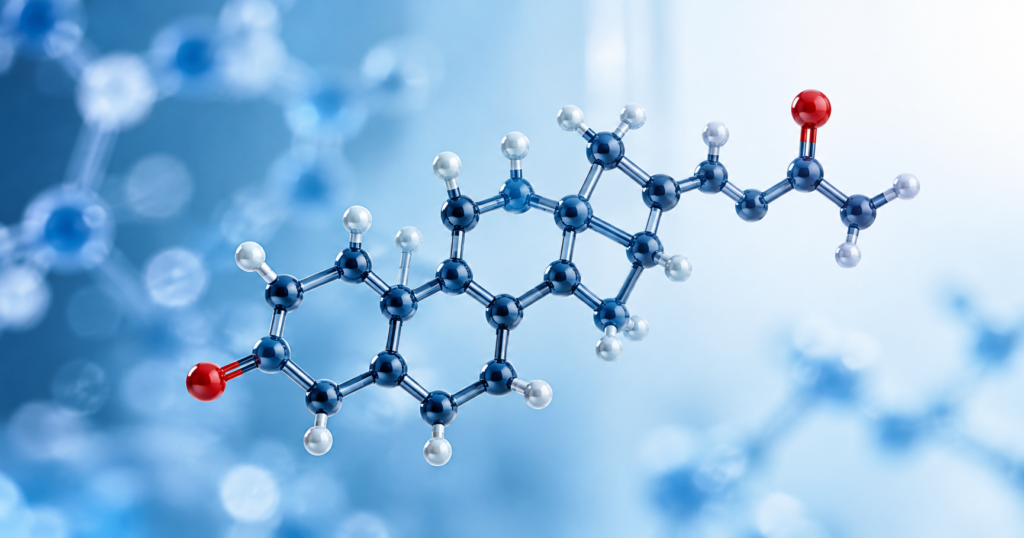
Testosterone propionate is an esterified form of testosterone, a hormone involved in several important physiological processes. These processes include reproductive function, muscle maintenance, bone health, and the development of male secondary sexual characteristics.
The propionate ester influences how testosterone is released after administration. Once the ester is removed, the body receives the same active testosterone hormone released by other testosterone esters.
This distinction explains why testosterone formulations can have different pharmacokinetic profiles. Although they release the same hormone, their absorption and release characteristics differ.
Understanding the Propionate Ester
An ester is a chemical modification that can alter a compound’s pharmaceutical properties. In testosterone propionate, a short propionate group attaches to the testosterone molecule.
This modification influences the compound’s behavior in oil-based injectable formulations. It also affects how quickly the ester leaves the injection depot and enters circulation.
Testosterone propionate has a relatively short release profile compared with longer-chain esters. Consequently, its concentration pattern differs from formulations such as testosterone enanthate and testosterone cypionate.
The ester primarily influences release characteristics rather than changing testosterone’s fundamental biological activity. This distinction is important when comparing different testosterone preparations.
Testosterone Propionate 100 mg/mL
The Vpharma Lab catalog lists a presentation labeled Testosterone Propionate 100 mg/mL. This concentration indicates the stated amount of testosterone propionate per milliliter of formulation.
Concentration and total container content represent different measurements. A product description should identify both accurately when the information is available.
Readers can consult the Testosterone Propionate product page for its published specifications. This page provides the commercial product description and its stated concentration.
Medical Context of Testosterone Propionate
Testosterone has established medical uses in treating certain cases of male hypogonadism. This condition involves insufficient testosterone production associated with an underlying hormonal or testicular disorder.
Clinical assessment generally considers symptoms alongside repeatedly low testosterone measurements. Healthcare professionals may investigate the underlying cause before determining whether hormone therapy is appropriate.
The Endocrine Society’s testosterone therapy guidelines explain these diagnostic principles and relevant monitoring considerations.
Testosterone Formulations and Their Medical Roles
Testosterone preparations use different ester structures and delivery systems. These differences influence how the hormone enters circulation and how its concentration changes over time.
Testosterone propionate has a relatively short duration of action. Testosterone enanthate and testosterone cypionate generally provide longer release profiles.
The availability and clinical use of individual formulations vary between countries. Their appropriate medical role therefore depends on the specific formulation and applicable clinical practice.
The Importance of Testosterone in the Body
Testosterone contributes to libido, muscle maintenance, bone mineral density, and normal reproductive function. It also supports the development and maintenance of male secondary sexual characteristics.
The hormone participates in several biological processes rather than acting exclusively on muscle tissue. Its effects depend on receptor activity, metabolism, and interactions with other hormonal systems.
Understanding these functions provides useful context for testosterone propionate. The ester affects delivery characteristics, while testosterone produces the principal biological effects.
How Does Testosterone Propionate Work?
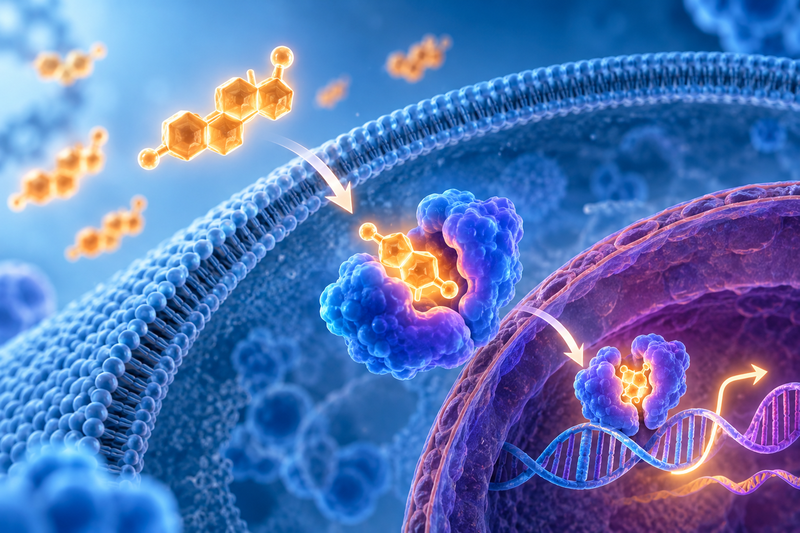
Testosterone propionate releases testosterone into circulation after the ester is removed. The resulting testosterone interacts with androgen receptors throughout the body.
These receptors regulate gene expression and influence several physiological processes. Their activity helps explain testosterone’s effects on muscle tissue, reproductive function, bones, and other androgen-sensitive tissues.
The active hormone released from testosterone propionate is the same testosterone released from other testosterone esters. Their main pharmacological distinction involves delivery and release characteristics.
Androgen Receptor Activity
Androgen receptors are proteins that respond to testosterone and related hormones. Once activated, they influence cellular processes involved in gene expression and protein regulation.
In skeletal muscle, androgen signaling contributes to protein metabolism and tissue maintenance. Testosterone also supports reproductive function and the development of male secondary sexual characteristics.
Its biological activity extends beyond muscle tissue. Androgen signaling also participates in bone metabolism, skin characteristics, and red blood cell production.
These processes help explain testosterone’s broad physiological role. Individual responses nevertheless depend on several biological and clinical factors.
Conversion Into Other Hormones
The body can convert testosterone into other hormones through established metabolic pathways. One important pathway involves aromatase, an enzyme that converts testosterone into estradiol.
Another pathway involves 5-alpha-reductase, which converts testosterone into dihydrotestosterone, commonly called DHT. These hormones have distinct roles in different tissues.
Estradiol contributes to bone health and other physiological functions in men. DHT participates in androgen-dependent processes involving the skin and prostate.
These pathways explain why testosterone influences several body systems. Their activity varies according to individual physiology, hormone concentrations, and tissue characteristics.
Testosterone Propionate Half-Life and Duration of Action
The half-life of a medication describes how its concentration decreases over time. For injectable testosterone esters, interpretation also involves gradual absorption from the injection depot.
Testosterone propionate has a shorter release profile than testosterone enanthate or testosterone cypionate. The precise pharmacokinetic measurements depend on the formulation and the conditions studied.
A published study of testosterone propionate pharmacokinetics examined how the compound enters circulation following intramuscular administration. Its findings help illustrate the relationship between ester structure and testosterone exposure.
Why the Half-Life Matters
Release characteristics influence how testosterone concentrations change over time. Shorter-acting formulations generally produce different concentration patterns than longer-acting preparations.
The half-life should not be interpreted as an exact prediction for every individual. Formulation characteristics, absorption, and individual physiology can influence measured concentrations.
This distinction is particularly useful when comparing testosterone esters. Different release profiles do not mean that each ester releases a fundamentally different hormone.
Testosterone Propionate vs. Testosterone Enanthate
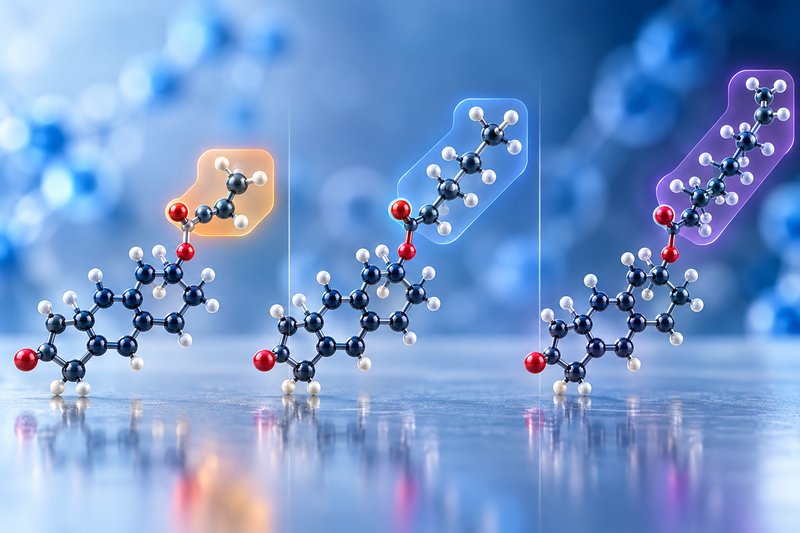
The main difference between testosterone propionate and testosterone enanthate concerns their ester structures and release characteristics.
Testosterone propionate has a shorter ester chain. Testosterone enanthate has a longer chain, which generally supports more prolonged release from an injectable depot.
Both formulations release testosterone as the active hormone. Their differences primarily involve pharmacokinetics rather than fundamentally different androgen receptor mechanisms.
Key Differences Between the Two Esters
| Characteristic | Testosterone Propionate | Testosterone Enanthate |
| Ester structure | Short-chain propionate | Longer-chain enanthate |
| Release profile | Relatively short-acting | Longer-acting |
| Active hormone | Testosterone | Testosterone |
| Concentration pattern | Generally shorter release | Generally prolonged release |
| Biological mechanism | Androgen receptor activity | Androgen receptor activity |
These characteristics summarize general pharmacological differences. Specific release patterns depend on the formulation and other relevant variables.
Readers can explore our existing Testosterone Enanthate guide for additional information about that formulation.
Testosterone Propionate vs. Testosterone Cypionate
Testosterone cypionate also provides a longer release profile than testosterone propionate. Its ester structure influences absorption from the injection depot.
Like enanthate, cypionate releases the same active testosterone hormone. Their principal distinctions involve pharmacokinetics and formulation characteristics.
The clinical availability of these preparations varies between countries. Their medical use depends on the individual formulation and applicable clinical practice.
Physiological Functions Associated With Testosterone

Testosterone influences several body systems, explaining its broad physiological activity. Its functions include reproductive regulation, muscle protein metabolism, bone maintenance, and red blood cell production.
These processes operate within complex hormonal networks. Their existence does not guarantee particular changes in body composition, strength, or general wellbeing.
Muscle and Bone Physiology
Testosterone contributes to muscle maintenance and the regulation of protein metabolism. It also supports bone mineral density and normal skeletal function.
In individuals with documented testosterone deficiency, medically appropriate treatment may improve certain deficiency-related symptoms. The degree of response varies with the underlying condition and individual characteristics.
Muscle development also depends on nutrition, physical activity, recovery, and genetics. Testosterone concentration alone cannot predict specific physical outcomes.
Reproductive and Sexual Function
Testosterone contributes to libido and the maintenance of male reproductive characteristics. Its regulation involves interactions between the hypothalamus, pituitary gland, and testes.
External testosterone can influence the hormonal signals responsible for natural testosterone production. These changes may also affect sperm production and reproductive function.
This relationship illustrates testosterone’s broader role in hormonal regulation. Its physiological effects extend beyond libido or muscle tissue alone.
Possible Side Effects of Testosterone Propionate
Possible side effects reflect testosterone’s activity across different body systems. Individual responses vary according to health status, hormone exposure, formulation, and other factors.
Reported effects can include acne, oily skin, fluid retention, changes in cholesterol, and increased red blood cell levels. Testosterone exposure can also suppress natural hormone production and reduce sperm production.
The specific effects and their likelihood depend on individual circumstances. Appropriate medical evaluation can help assess treatment response and identify changes requiring attention.
Understanding Testosterone Propionate Product Information
Clear product information helps readers distinguish active ingredients from formulation characteristics. Concentration, ester identity, and dosage form each describe different aspects of a product.
For example, a label stating 100 mg/mL identifies the stated concentration. It does not necessarily represent the total amount contained in the entire container.
Readers can consult the Vpharma Lab Testosterone Propionate listing for its published specifications. The listing and scientific literature serve different purposes when describing product characteristics and general pharmacology.
At Vpharma Lab, we aim to present product information clearly and consistently. Understanding terminology helps readers interpret technical descriptions more accurately.
Frequently Asked Questions About Testosterone Propionate
1. What is testosterone propionate?
Testosterone propionate is an esterified form of testosterone with a relatively short release profile. The ester influences pharmacokinetics while the active hormone remains testosterone.
2. What is the active hormone in testosterone propionate?
The active hormone is testosterone. Enzymes remove the propionate ester after administration, releasing testosterone into circulation.
3. What does the propionate ester do?
The propionate ester changes the compound’s pharmaceutical properties and release characteristics. Its shorter chain generally supports a shorter release profile than longer-chain testosterone esters.
4. How does testosterone propionate differ from testosterone enanthate?
Testosterone propionate has a shorter ester chain and generally a shorter release profile. Testosterone enanthate releases the same active hormone over a more prolonged period.
5. How does testosterone propionate differ from testosterone cypionate?
Both formulations release testosterone, but their ester structures influence their pharmacokinetic profiles. Cypionate generally provides a longer release profile than propionate.
6. What does testosterone propionate half-life mean?
Half-life describes how a drug concentration decreases over time. With injectable esters, absorption from the injection depot also influences observed pharmacokinetics.
7. What does 100 mg/mL mean on a product label?
The figure indicates the stated amount of testosterone propionate per milliliter of formulation. It does not independently specify the total quantity contained in the entire container.
8. How does testosterone interact with androgen receptors?
Testosterone binds to androgen receptors, influencing gene expression and several physiological processes. These include muscle maintenance, reproductive function, and androgen-dependent characteristics.
9. Can testosterone convert into other hormones?
Yes. Aromatase converts testosterone into estradiol, while 5-alpha-reductase converts it into dihydrotestosterone. Both hormones have distinct physiological roles.
10. What factors influence the characteristics of different testosterone esters?
Relevant factors include ester structure, formulation, absorption, and individual metabolism. These factors help explain differences between testosterone preparations.
Understanding Testosterone Propionate and Its Characteristics
Testosterone propionate is a short-acting ester that releases testosterone into circulation. Its distinguishing feature is its relatively short release profile compared with longer-chain testosterone esters.
Understanding its pharmacology clarifies the relationship between ester structure, hormone activity, and concentration patterns. Testosterone also contributes to muscle physiology, reproductive function, bone health, and other body systems.
At Vpharma Lab, we believe clear terminology and accurate product information help readers understand these distinctions. Examining composition, pharmacokinetics, and physiological functions provides a useful foundation for understanding testosterone propionate.


