
Tirzepatide vs Semaglutide: Key Differences, Uses, and Side Effects
Tirzepatide vs semaglutide is an increasingly common comparison in discussions about type 2 diabetes, weight management, and metabolic health. Both medications act on hormone pathways involved in appetite regulation and blood glucose control, but they differ in their mechanisms and clinical evidence.
Understanding these differences requires more than comparing weight-loss percentages. Their approved uses, formulations, side effects, and individual treatment considerations also matter.
At Vpharma Lab, we examine compounds through their pharmacology and clinical context. This guide compares tirzepatide and semaglutide using published research and official prescribing information, highlighting what the evidence shows and where individual responses may differ.
What Are Tirzepatide and Semaglutide?
Tirzepatide and semaglutide are medications that target incretin hormone pathways. These hormones help regulate blood glucose, appetite, and other aspects of metabolism.
Both medications have applications in metabolic care, although their specific indications depend on the product formulation and country. In the United States, tirzepatide is marketed under names including Mounjaro and Zepbound. Semaglutide is available under names including Ozempic, Wegovy, and Rybelsus.
These brand names are not interchangeable. Each product has its own approved indications, formulation, and prescribing information.
What Is Tirzepatide?
Tirzepatide is a dual glucose-dependent insulinotropic polypeptide (GIP) and glucagon-like peptide-1 (GLP-1) receptor agonist. It activates both receptor pathways within a single molecule.
This dual action influences glucose-dependent insulin secretion and appetite-related signaling. It also affects gastric emptying, particularly during the early stages of treatment.
In the United States, Mounjaro is indicated for improving blood glucose control in adults with type 2 diabetes. Zepbound is indicated for chronic weight management in eligible adults and for moderate-to-severe obstructive sleep apnea in adults with obesity.
These indications apply to specific products and clinical circumstances. Regulatory approvals can differ between countries.
What Is Semaglutide?
Semaglutide is a GLP-1 receptor agonist. It mimics the activity of the GLP-1 hormone, supporting glucose-dependent insulin secretion and influencing appetite and food intake.
Semaglutide can slow gastric emptying and help people feel full for longer. These effects contribute to its role in diabetes treatment and weight management.
In the United States, Ozempic and Rybelsus are semaglutide products used for type 2 diabetes under their respective labels. Wegovy is used for approved weight-management indications and certain additional indications.
Semaglutide formulations include injectable and oral products, depending on the brand and indication. Current formulations and approvals should always be checked against the relevant local prescribing information.
Tirzepatide vs Semaglutide: Key Differences
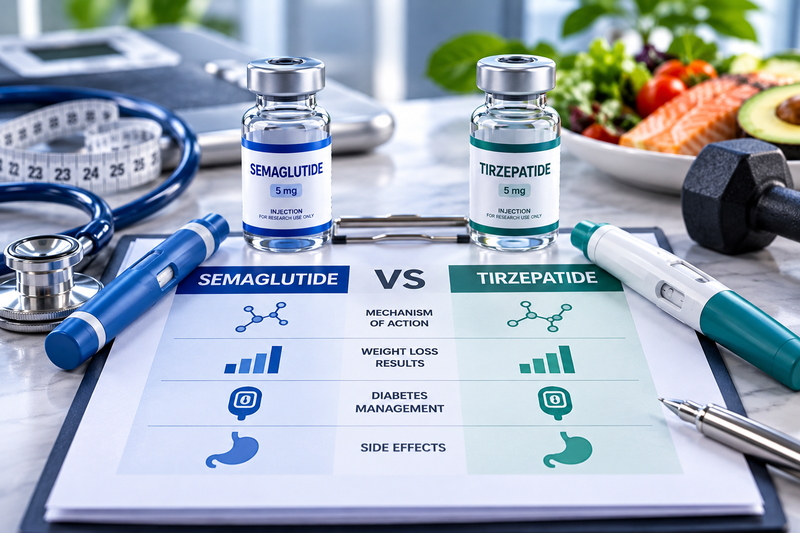
The most important difference is their receptor activity. Tirzepatide activates GIP and GLP-1 receptors, while semaglutide primarily targets GLP-1 receptors.
Their formulations, approved uses, and evidence from comparative trials also differ.
| Feature | Tirzepatide | Semaglutide |
| Main receptor activity | GIP and GLP-1 | GLP-1 |
| Main metabolic applications | Type 2 diabetes and selected weight-management indications | Type 2 diabetes and selected weight-management indications |
| Formulations | Injectable products | Injectable and oral products, depending on indication |
| Administration | Weekly injection for commonly used injectable products | Weekly injection or daily oral administration, depending on product |
| Weight-loss evidence | Greater average weight reduction than semaglutide in the SURMOUNT-5 trial | Substantial average weight reduction, depending on formulation and trial |
| Common side effects | Mainly gastrointestinal symptoms | Mainly gastrointestinal symptoms |
| Product-specific considerations | Indication, contraceptive interactions, and precautions depend on product | Indication, formulation, and precautions depend on product |
For additional product information, explore the Vpharma Lab listings for Semaglutide 5 mg and Tirzepatide 5 mg.
How Do Tirzepatide and Semaglutide Work?
Tirzepatide and Dual Incretin Signaling
Tirzepatide activates both GIP and GLP-1 receptors. These pathways participate in regulating insulin secretion in response to glucose.
The medication can also influence appetite and food intake. Its effect on gastric emptying contributes to the way digestion and fullness may change during treatment.
The combination of these receptor activities provides a possible explanation for the results observed in clinical trials. However, receptor activity alone cannot predict an individual’s response.
Semaglutide and GLP-1 Receptor Activation
Semaglutide activates GLP-1 receptors. This action helps regulate blood glucose and can influence appetite and satiety.
The medication supports insulin secretion when blood glucose is elevated. It also reduces glucagon secretion in a glucose-dependent manner.
Changes in appetite and food intake contribute to weight reduction. The overall effect depends on treatment context, formulation, tolerability, and individual characteristics.
Tirzepatide vs Semaglutide for Weight Loss

Weight reduction is one of the main reasons people compare these medications. Both have demonstrated clinically meaningful average weight reductions in randomized trials.
However, trial results must be interpreted in context. Different studies use different doses, treatment durations, eligibility criteria, and comparison groups.
What Did the SURMOUNT-5 Trial Find?
The SURMOUNT-5 trial, published in The New England Journal of Medicine in 2025, directly compared tirzepatide and semaglutide in adults with obesity who did not have diabetes.
Participants received the maximum tolerated study dose of tirzepatide or semaglutide. At 72 weeks, the estimated mean weight change was approximately −20.2% with tirzepatide and −13.7% with semaglutide.
These findings showed greater average weight reduction with tirzepatide in that particular study. The trial compared tirzepatide doses of 10 mg or 15 mg with semaglutide doses of 1.7 mg or 2.4 mg.
The results do not mean that every person will lose more weight with tirzepatide. Individual responses and tolerability vary, and the trial did not compare every available formulation.
Importantly, these results should not be generalized to newer semaglutide formulations or doses that were not included in the trial. For example, the United States approved a higher-dose Wegovy HD injection in 2026 for certain adults with obesity. That formulation was not evaluated in SURMOUNT-5.
Why Weight-Loss Results Are Not the Only Factor
Average results can help compare treatments across study populations. They cannot determine which medicine is best for every patient.
Tolerability, existing medical conditions, previous treatment responses, and approved indications can influence clinical decisions. Access and formulation preferences may also matter.
Weight management is a long-term clinical process. Results should be considered alongside metabolic health, nutritional status, and other relevant health outcomes.
Tirzepatide vs Semaglutide for Type 2 Diabetes
Both medications can improve glycemic control in people with type 2 diabetes. Their clinical evidence includes changes in glycated hemoglobin (HbA1c), a marker of average blood glucose over approximately three months.
The SURPASS-2 trial directly compared tirzepatide with semaglutide in adults with type 2 diabetes whose glucose levels were inadequately controlled with metformin.
After 40 weeks, all three studied tirzepatide groups had greater average HbA1c reductions than the semaglutide 1 mg group. The trial also found greater average weight reductions with tirzepatide at the doses studied.
These findings support tirzepatide’s efficacy in that trial population. However, the comparator was semaglutide 1 mg, which is not the same as every semaglutide formulation or dose used for other indications.
The study therefore should not be treated as a universal comparison of every available product.
Differences in Approved Medical Uses
The active ingredient alone does not determine a medicine’s approved use. Product-specific approvals and clinical evidence matter.
For example, different semaglutide products have distinct indications related to diabetes, weight management, and other qualifying health conditions. Tirzepatide products also have separate indications.
Zepbound’s indication for moderate-to-severe obstructive sleep apnea in adults with obesity is one example of an additional product-specific use. Such differences should be considered when discussing tirzepatide vs semaglutide for an individual condition.
Always consult the current label for the specific product and country.
Tirzepatide vs Semaglutide Side Effects
Tirzepatide and semaglutide share several possible adverse effects. Gastrointestinal symptoms are among the most commonly reported with both medications.
The type, frequency, and severity of side effects can vary. The following sections summarize major considerations described in prescribing information.
Common Gastrointestinal Effects
Common adverse effects include nausea, diarrhea, vomiting, constipation, and abdominal discomfort. Some people also experience indigestion, bloating, or reduced appetite.
These symptoms may become more noticeable during treatment initiation or dose escalation. In many cases, gastrointestinal symptoms decrease over time, although some people find them difficult to tolerate.
Persistent vomiting or diarrhea can contribute to dehydration. Reduced fluid intake and fluid loss can also increase the risk of kidney problems in susceptible individuals.
Pancreatitis and Gallbladder Problems
Acute pancreatitis has been reported with both medications. Severe, persistent abdominal pain, particularly when accompanied by vomiting, requires prompt medical evaluation.
Gallbladder problems, including gallstones or inflammation, have also been reported. Rapid weight reduction itself may contribute to gallstone risk.
These concerns do not mean that every patient will develop a complication. They remain important considerations when evaluating symptoms and treatment risks.
Hypoglycemia
These medicines do not usually cause substantial hypoglycemia when used alone. The risk can increase when they are combined with insulin or certain other diabetes medications.
Symptoms may include sweating, shaking, confusion, dizziness, or unusual weakness. Treatment plans may require professional review when additional glucose-lowering medicines are used.
Blood glucose monitoring should follow the clinician’s recommendations and the relevant product label.
Thyroid C-Cell Tumor Warning
The United States prescribing information for tirzepatide and semaglutide products includes a warning about thyroid C-cell tumors observed in rodents. Whether this finding applies to humans remains uncertain.
The relevant products are contraindicated for people with a personal or family history of medullary thyroid carcinoma or multiple endocrine neoplasia syndrome type 2 (MEN 2).
This warning should be discussed with a healthcare professional when reviewing treatment options. It is a specific labeling precaution rather than proof that these medicines cause thyroid cancer in humans.
Other Safety Considerations
Both medications delay gastric emptying and may affect the absorption of some oral medicines. They can also be associated with severe gastrointestinal reactions, gallbladder disease, kidney injury due to dehydration, and hypersensitivity reactions.
People with diabetes and diabetic retinopathy may need particular attention when blood glucose improves rapidly. Planned surgery or procedures involving anesthesia should also be discussed with the treating team.
Pregnancy requires specific consideration. These medicines are not intended for routine weight reduction during pregnancy, and product labels give specific instructions for pregnancy-related management.
Tirzepatide can also affect the reliability of oral contraceptives after treatment initiation and dose escalation. Its prescribing information advises additional or non-oral contraception during specified periods.
How Clinicians Evaluate These Treatment Options
There is no single choice that fits everyone. Clinical evaluation considers the condition being treated, medical history, other medicines, and individual priorities.
For people with type 2 diabetes, HbA1c levels and other indicators of glucose control may help assess treatment response. For weight management, clinicians may assess weight-related conditions, changes in body weight, and treatment tolerability.
Other considerations include a history of pancreatitis, gallbladder disease, kidney problems, diabetic retinopathy, and relevant thyroid conditions. Pregnancy plans and other medicines can also affect treatment decisions.
Follow-up allows clinicians to evaluate benefits and side effects over time. Treatment should be reviewed in the context of the specific medication’s approved labeling.
Tirzepatide vs Semaglutide: Which Is Better?
Clinical evidence shows that tirzepatide produced greater average weight reduction than semaglutide in the SURMOUNT-5 trial. It also showed greater average HbA1c and weight reductions than semaglutide 1 mg in SURPASS-2.
However, these findings apply to the specific populations, doses, and treatment periods studied. They do not establish that tirzepatide is universally better for every patient or every indication.
Semaglutide has its own evidence base, formulation options, and product-specific indications. These factors may be relevant when comparing treatment alternatives.
A balanced comparison should consider clinical goals, existing conditions, tolerability, product labeling, and individual response. No trial result can replace an individualized assessment by a qualified healthcare professional.
Frequently Asked Questions About Tirzepatide vs Semaglutide
1. What is the main difference between tirzepatide and semaglutide?
Tirzepatide activates both GIP and GLP-1 receptors. Semaglutide primarily activates GLP-1 receptors. Both influence glucose regulation and appetite.
2. Does tirzepatide produce more weight loss than semaglutide?
In the SURMOUNT-5 trial, tirzepatide produced greater average weight reduction than semaglutide over 72 weeks. Individual results may differ, and the trial compared specific formulations and doses.
3. Which medication has more evidence for type 2 diabetes?
Both have extensive clinical evidence for type 2 diabetes. SURPASS-2 found greater average HbA1c reductions with tirzepatide than with semaglutide 1 mg in the studied population.
4. Are tirzepatide and semaglutide the same medication?
No. They are different active ingredients with different receptor activity. Their product names, formulations, indications, and prescribing instructions also differ.
5. What side effects do these medications have in common?
Both can cause nausea, vomiting, diarrhea, constipation, and abdominal discomfort. Other important concerns include gallbladder problems, pancreatitis, and dehydration-related kidney injury.
6. Is semaglutide available as a tablet?
Yes. Semaglutide is available in oral formulations for specific approved indications, alongside injectable formulations. The available products and indications vary by country.
7. Can tirzepatide and semaglutide be taken together?
Combining them is not recommended under the relevant product labeling. Both affect incretin pathways, and concurrent use can introduce unnecessary risks.
8. Do these medicines have the same contraindications?
They share important precautions, including warnings about thyroid C-cell tumors observed in rodents. Relevant products are contraindicated in people with a personal or family history of medullary thyroid carcinoma or MEN 2.
9. Do these medicines require medical follow-up?
Clinical follow-up helps evaluate treatment response, tolerability, blood glucose when relevant, and potential complications. The specific monitoring plan depends on the patient and the product used.
10. Does the strongest average clinical result determine the best treatment?
Not necessarily. Average trial results are only one part of the comparison. Individual conditions, treatment goals, tolerability, formulation, and approved indications also matter.
Understanding Tirzepatide vs Semaglutide | Vpharma Lab
Tirzepatide and semaglutide both play important roles in modern metabolic care. Their receptor activity differs, while both can improve blood glucose control and support weight reduction in eligible patients.
Clinical trials have found greater average weight reduction with tirzepatide in a direct obesity comparison. However, results should be interpreted within the context of each study and its specific treatment regimens.
Understanding the differences also means recognizing their shared side effects and product-specific precautions. A useful comparison considers the evidence without overstating benefits or minimizing risks.
At Vpharma Lab, our educational approach is to explain pharmacology, clinical findings, and treatment context clearly. Readers can explore additional educational resources through the Vpharma Lab Blog. The Vpharma Lab Store provides catalog information for listed products, while medical treatment decisions depend on appropriate prescribing information and professional clinical assessment.
Explore the available product catalog at the Vpharma Lab Store and visit the Vpharma Lab Blog for more educational content on pharmaceutical compounds and metabolic health.
References and Further Reading
- SURPASS-2: Tirzepatide versus Semaglutide in Type 2 Diabetes — The New England Journal of Medicine
- SURMOUNT-5: Tirzepatide Compared with Semaglutide for Obesity — The New England Journal of Medicine
- Zepbound (tirzepatide) Prescribing Information — FDA
- Wegovy (semaglutide) Prescribing Information — FDA
- FDA: Approval of Higher-Dose Wegovy for Weight Management
- FDA: Approval of Tirzepatide for Obstructive Sleep Apnea


